
Fresh water
We watched it flow right through our hands.

CHIANG MAI, Thailand — The idea of traveling the same month I lost my job didn’t quite fit with my Midwestern work ethic, but we’d booked this trip far in advance of the layoffs at the Washington Post. It was the middle of February, and I was in this chaotic Southeast Asian city trying to be nice to myself.
After 20 years of mediocre wages, I had climbed to the highest level of my profession, and for the past two years had worked the most stressful job of my career. Then, in one Zoom call, I watched all that effort, dedication, and achievement taken away.
I was making an effort to enjoy the tea, food, and the warm weather. Trying not to drink too much, check my email, or keep telling myself I’d failed. The job leads and sympathy had poured in when I posted the news of the layoffs on social media, but I wasn’t about to keep doomscrolling LinkedIn from the lounge chair at the pool.
This was a beautiful place, so I was trying to stifle my foul mood. We’d gone through a lot over the past two years to relocate my family to Seoul and learn this job. But I was working on shifting my thinking — I had convinced this global news organization to pay for me to move to my wife’s home country, and they’d paid me good wages. My daughter had already learned so much. I was attempting to be grateful for the experience and make a plan to turn it into something better.
All once I grieved the future I might’ve had with this company, one glass of Thai tea at a time.
I hadn’t planned it this way, but I realized, just like so many other people who come to Southeast Asia after divorces or people die or job losses, I could let this place heal me, too, through the food and the culture.
The first couple of days, we did the normal Chiang Mai stuff. Saw elephants. Shopped for handicrafts at the local market. Ate as much and as often as we could.
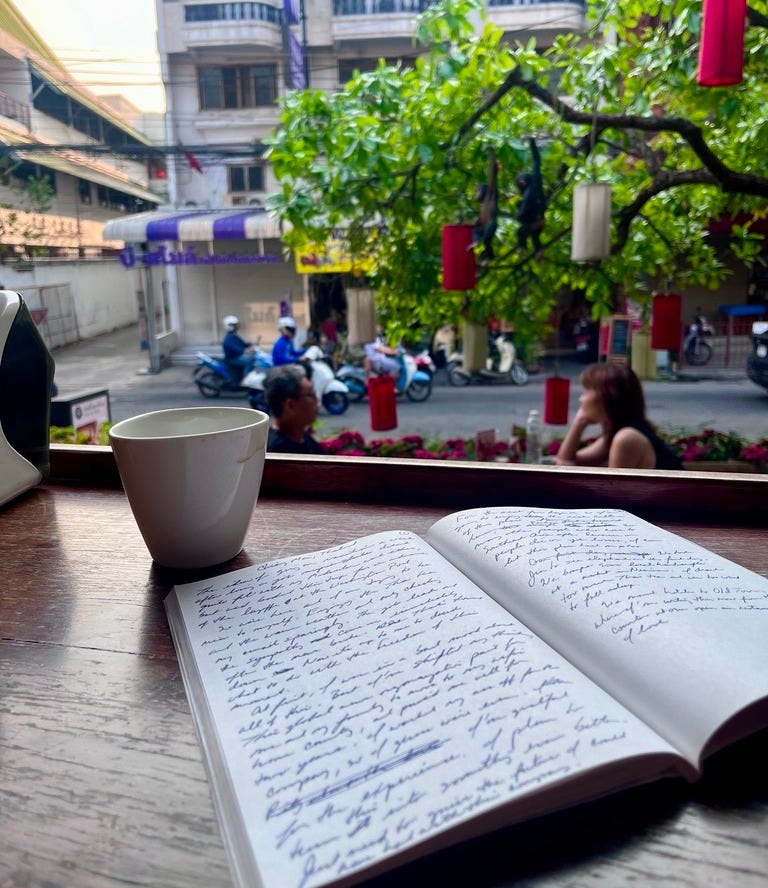
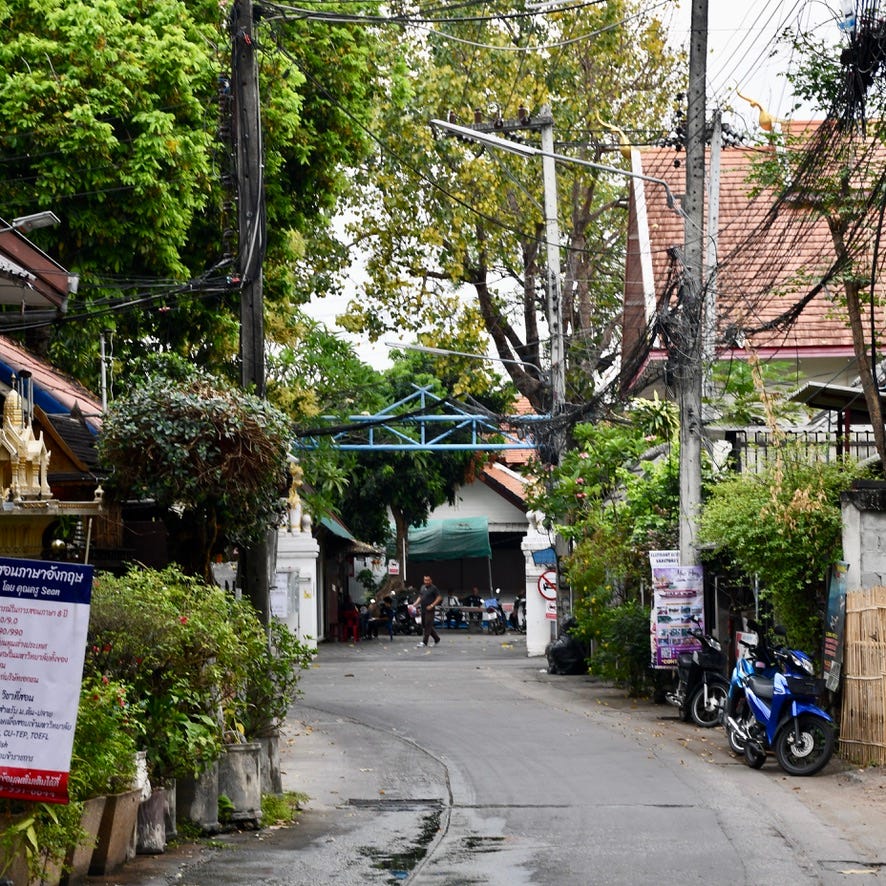
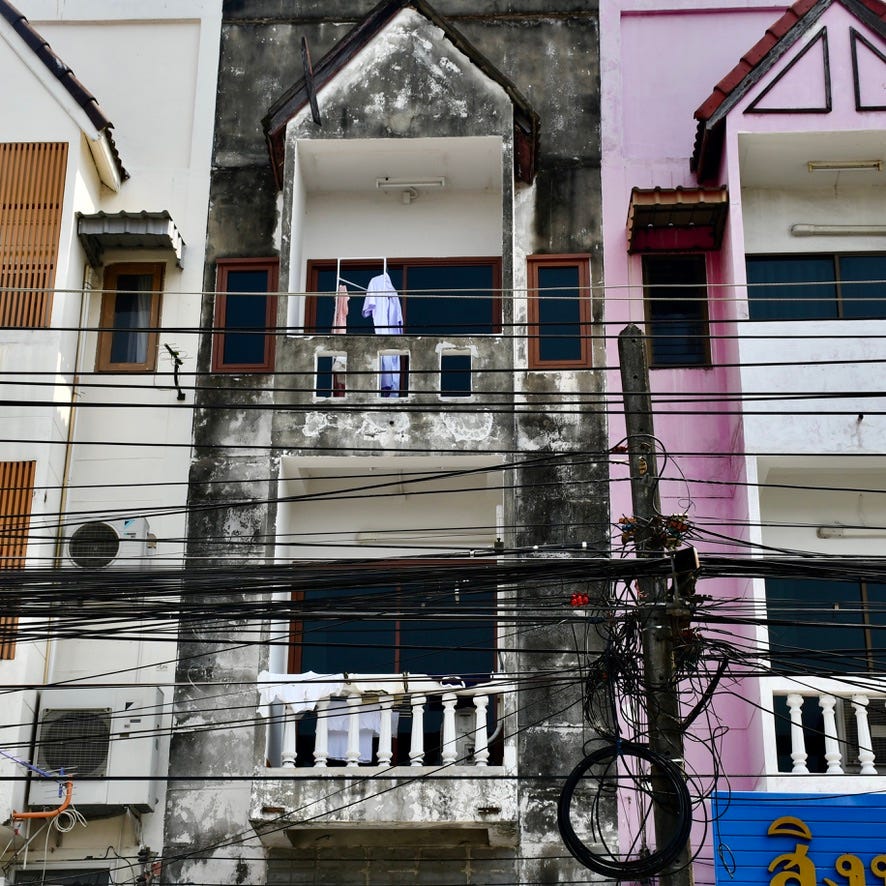
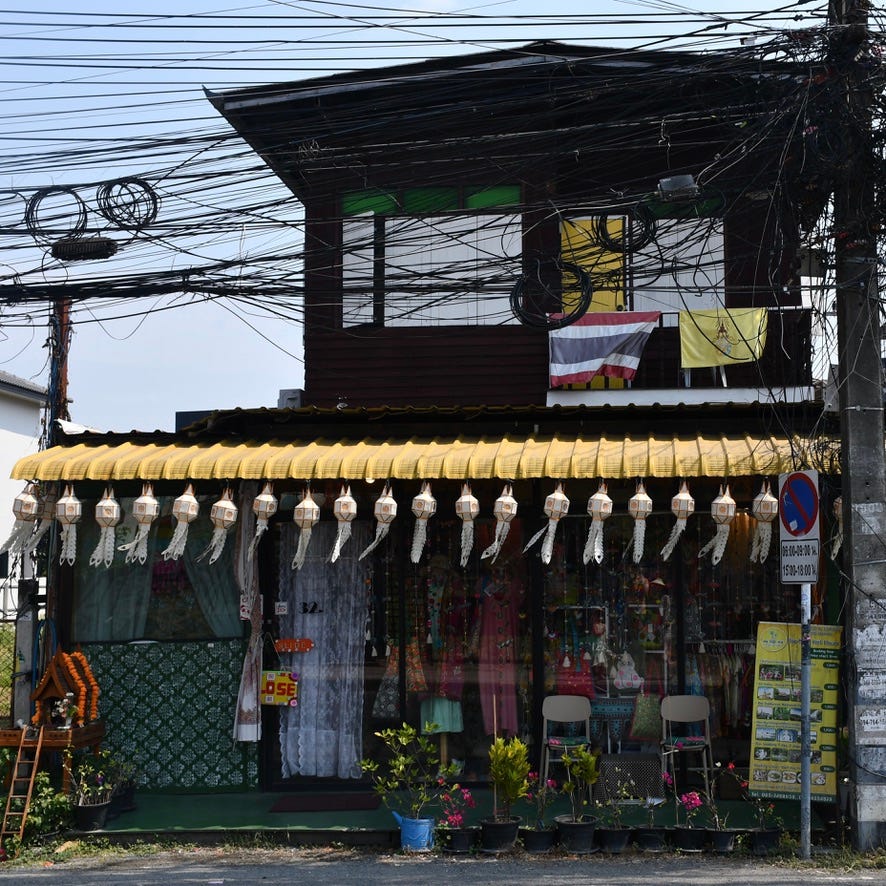
Our hotel in Old Town had an open-air restaurant. I came down in the morning while the girls slept and drank tea from the coffee machine and wrote in my notebook. Underneath the motorbike and tuk tuk noise, I heard the patrons conversing in Chinese, French, English — other languages I didn’t recognize. Down the street were bike rental shops, massage parlors, weed dispensaries, smoothie stands, and a 7-Eleven where I saw a Western woman super-gluing her flip-flop back together. Above it all ran a tangled snarl of powerlines.
Despite the peace on offer everywhere, I was still angry about the job loss. Some of that was ego, but it was also justified — I had been so proud to work there. To come from my rural upbringing and my education at a state school, to work my way up to that newspaper that once meant so much to me and my profession, then to see it so badly damaged … just cause for seething.
The Washington Post has long stood as a symbol of truth and courage. Last fall, the company invited novelist and teacher George Saunders to speak to the staff about writing. Many of the tips and pieces of advice in his opening talk I had read elsewhere and in his excellent book on reading and writing, A Swim in a Pond in the Rain. It got more interesting when he started taking questions.
One of the staff members asked him how he coped with the overall craziness of the general state of things. He said he read the Post, and when he did, he felt like there were like-minded people who still have “clarity of mind.”
“That’s incredibly reassuring to know that as crazy as things seem, that sanity still exists,” he said.
Saunders went on to tell the parable of the king and the poisoned well, where a wizard poisons a village’s water and makes everyone crazy, and said that the Post was the clean water that people needed to drink.
“You’re running a river of fresh water through a very confused country, and that’s holy work,” he said. What was happening to the TV networks was “terrifying” for people in the U.S., Saunders added, because “the source of clean water is going to get choked off, or it’s going to get contaminated by larger political bias.”
“So just don’t forget the value of the clean water,” he said. “That’s what’s keeping us alive.”
I was inspired by that talk. I believed him. I went to work thinking I was helping keep that water flowing. Until they shut off the pipeline to Seoul.
At least I had been spared some self-loathing by the way it happened. My whole team had been eliminated, so I couldn’t feel as though I’d been singled out. The axe swung for all of us, no matter our talent, skill, or dedication.
I’d gone traveling to get over things before. Relationships. Places I wanted to put behind me. A quick trip to a foreign country never solved anything, but it didn’t hurt. It helped to remind me that life was full of possibilities, even after everything, even at 45.
While I was eating my dragonfruit, I overheard a couple of older British men — tan, undercut hairstyles, loud T-shirts, you know the type if you’ve spent time in the region — talking about the travelers with the tone of permanent residents.
“They damage themselves back home, then they come here to get fixed,” one said.
Medical tourism. Spiritual traveling. We all cope in our own way.
For dinner, we met an old friend — a guy I’d known since we were about 12. We grew up two miles from one another in a part of Nebraska that has seen time pass it by. He was raised in a town of about 800 people. I was raised a couple of miles from that town. He had stories of life in the U.S. We discussed old friends. It was good to see someone you have known for 30 years on the other side of the world.
I told him that since the layoffs, several people back home had reached out to say, “This sucks for you, but don’t come back here right now.”
At the Saturday night market on Wua Lai Road, we found a food court where we sat on plastic stools and filled our plates with food we’d never tasted. Sausages and noodles and huge river prawns. One of us would get up, browse the stalls, and come back with food for everyone to share. Jia ate the same dish she had eaten at almost every meal — fried rice. It was a glorious meal of strange, delicious food and cold beer.
The masters in the United States don’t want a world like this. They don’t want a global culture where we can sit in a market with people from across the planet — Asia, Australia, the Americas, Europe, Africa — enjoying one another’s culture, languages swirling in the air, everyone united in their curiosity over spicy, interesting food.
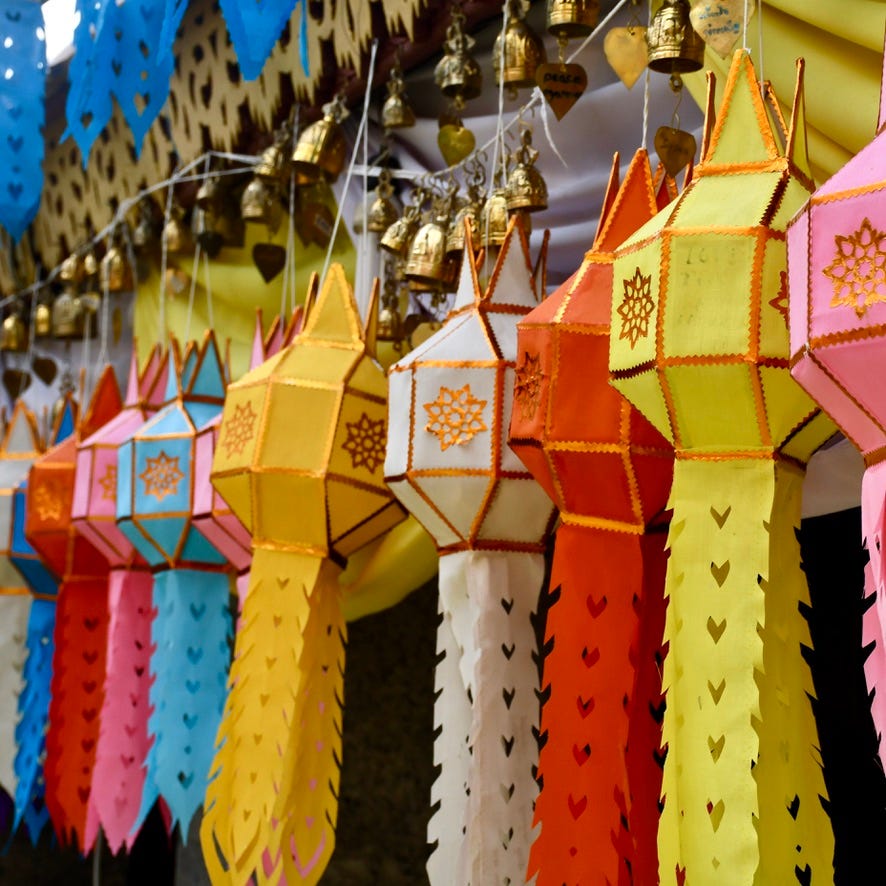
After the market, Nammin did the good wife move and suggested that I stay out with my old friend. The tuk tuk bumped some unidentifiable club music, swerving into oncoming traffic, then the driver laughed and the brrraappp of the motor as it sped past temples and hotels, and the night air, full of exhaust, cooled our faces.
Anyone who has lived in Asia for any period of time has an opinion on Thailand. Either you love it for its first-class beaches, great food, and friendly, hospitable culture, or you look down your nose at the sex tourism and the white men of a certain age with their young local women. In all my travels during my seven years on the continent, I’d only briefly been to the Land of Smiles — one night in Bangkok (did not make a hard man humble, but I could see how it might) and a couple of blissful days on Koh Samet. I had avoided the country, not because I was squeamish about the ladyboys or the go-go dancers, but because everyone I knew went there and talked about it, so I had to go to other places.
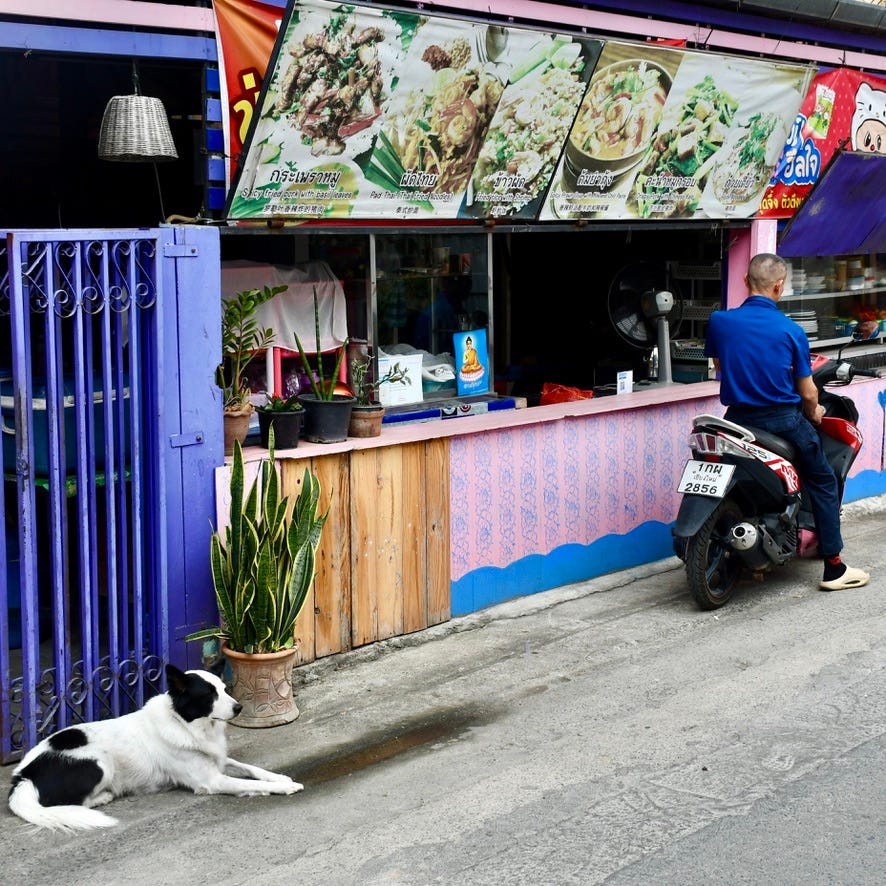
The driver dropped us off at the North Gate Jazz Co-op, which was full of what looked like travelers and probably a few resident expats. We sat at the bar with our Leo beers. A guy about a decade older took a stool next to us. He was sweaty, with his slicked black hair.
“Y’all American?” he asked.
We told him we were.
“Whereabouts?”
We answered that.
“I’m from the middle of nowhere, too. Tennessee. Name’s Jamie. Y’all been here before?”
We said we were just passing through.
“Well, I had a helluva night last night. I was outside the bar, and I met a pretty local girl. Seemed nice. We started talkin’ and pretty soon were at a karaoke bar. She told me to buy a bottle. So did I. Then they brought in some girls. And then there were some other girls. They brought out the snacks. The fruit plate. Pretty soon, I was ready to go and tried to pay, but they said I should stay. Order more drinks. I kept telling ‘em I was ready to settle up. I paid one bill, then they brought another bill for 30,000 baht, and I said no. That’s a thousand dollars. Then they called the cops, and they showed me a video where I was apparently agreeing to pay that. I don’t know. They took me to the police station. Then they marched me to the ATM. Hell, I didn’t want to end up in a Thai jail.”
“Well, shit. Sorry about that,” my friend said. “At least you’re back at it. She must’ve been cute.”
“I thought she liked me,” he said.
Soon, he was replaced by another American, Kristen from South Carolina, who seemed a little lost. Then Jamie came back with another woman from the U.S. It seemed like they were sticking together. I wanted to know if they were getting more than the usual discrimination from the traveler set, given the current state of our home country and its foreign relations, but I didn’t have a chance to ask. The bar closed at midnight, and we were back on another ride through the city.
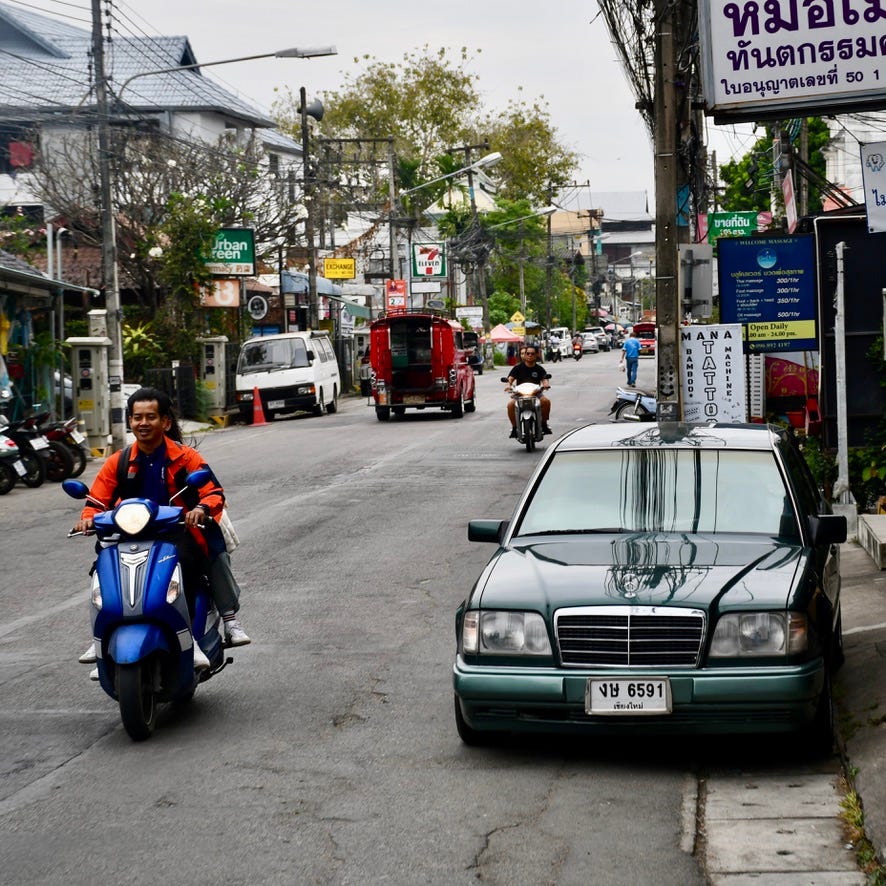
Some places feel claimed by other writers. Some experiences, too. Pamplona and the running of the bulls are obviously Hemingway’s. There’s a statue of him by the bullring that declares him a friend to the city. Hunter Thompson has Aspen. There used to be a shrine and offerings to him next to a tree on a Snowmass mountain ski run. Woody Creek Tavern still had pictures of him on the wall the last time I was there. Willa Cather has central Nebraska. Steinbeck has Monterey. When I was in the back of the tuk tuk riding through the Chiang Mai night, the music loud, the driver crazed and shouting unintelligible things, my old friend and I holding on, buzzed on Leo beer — I felt the ghost of Anthony Bourdain. This moment felt inescapably linked to his persona. He never lived here for any period of time that I know of, and I don’t think he ever made an effort to leave his mark on this place — it seemed he loved neighboring Vietnam best of all — but the Chiang Mai “No Reservations” episode was the best of him. Trying strange food — raw pig’s blood soaked in lemongrass that made even him blanch — drinking the local whiskey, nursing a hangover with the sweet and spicy Khao Soi soup in the morning … this was the perfect place for a man of his talents, who was so open to food and culture and experience.
I was proud of myself for only bringing him up once on this whole trip, when we were eating our own bowls of the coconut and chicken noodle soup. But I thought about him often. I thought about how what he believed in was exactly what the leaders in the U.S. are trying to kill, and how what we were doing was the best way to take direct action against these people who would close down borders and wall us off from each other.
I started traveling well before I had ever heard of Anthony Bourdain. By the time he came to prominence, I had been all over Asia. But I loved to watch him sit on these same short plastic stools, saying things on CNN like how we’re all going to be some shade of brown anyway, how we’re all going to be beautiful, coffee-colored people eventually. I felt the same way about the world, and to see someone so charming bring that perspective to mass media was thrilling. In its own way, his show was as political as any panel of talking heads on cable. We can’t escape politics because we can’t escape the world.
Just cause for seething indeed Bart.
Great read. Felt like I was there with you, wished I was. Work will find you eventually. Keep enjoying this time as it is.